Welcome to Rome ! A heady mix of haunting ruins, awe-inspiring art and vibrant street life, Italy’s capital Rome is one of the world’s most romantic and charismatic cities. Few cities can rival Rome’s astonishing artistic heritage. Throughout history, the […]
Welcome to Rome !
A heady mix of haunting ruins, awe-inspiring art and vibrant street life, Italy’s capital Rome is one of the world’s most romantic and charismatic cities. Few cities can rival Rome’s astonishing artistic heritage. Throughout history, the city has been a magnet for top artists and inspiring them to push the boundaries of creative achievement. The result is a city awash with priceless treasures. Stroll through the centre and without even trying you’ll come across masterpieces by the titans of European art – sculptures by Michelangelo, paintings by Caravaggio, frescoes by Raphael and fountains by Bernini.
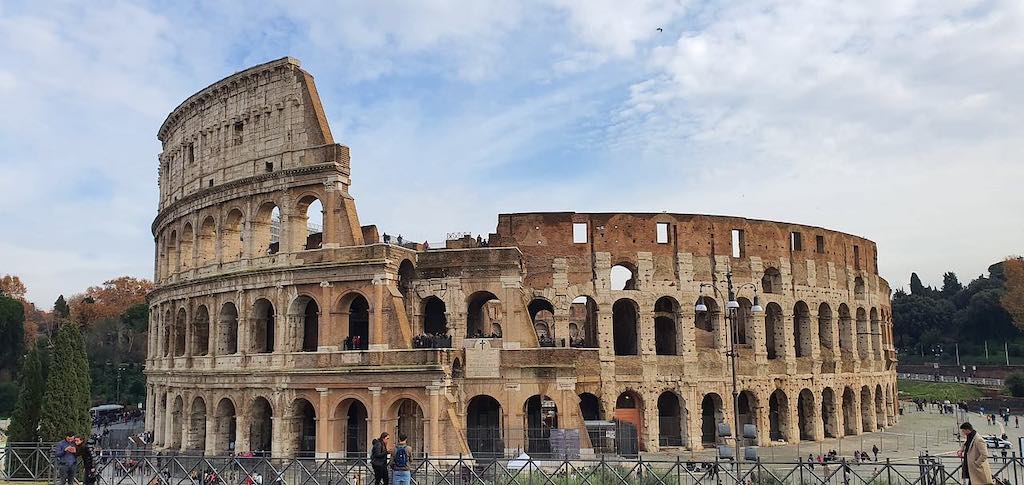
The Colosseum
Everyone wants to see the Colosseum, and it doesn’t disappoint, especially if accompanied by tales of armored gladiators and hungry lions. The Colosseum was large enough for theatrical performances, festivals, circuses, or games, which the Imperial Court and high officials watched from the lowest level, aristocratic Roman families on the second, the populace on the third and fourth. it doesn’t take a huge leap of the imagination to picture it in its pomp, with its steeply stacked stands full of frenzied spectators as armored gladiators slug it out on the arena below.
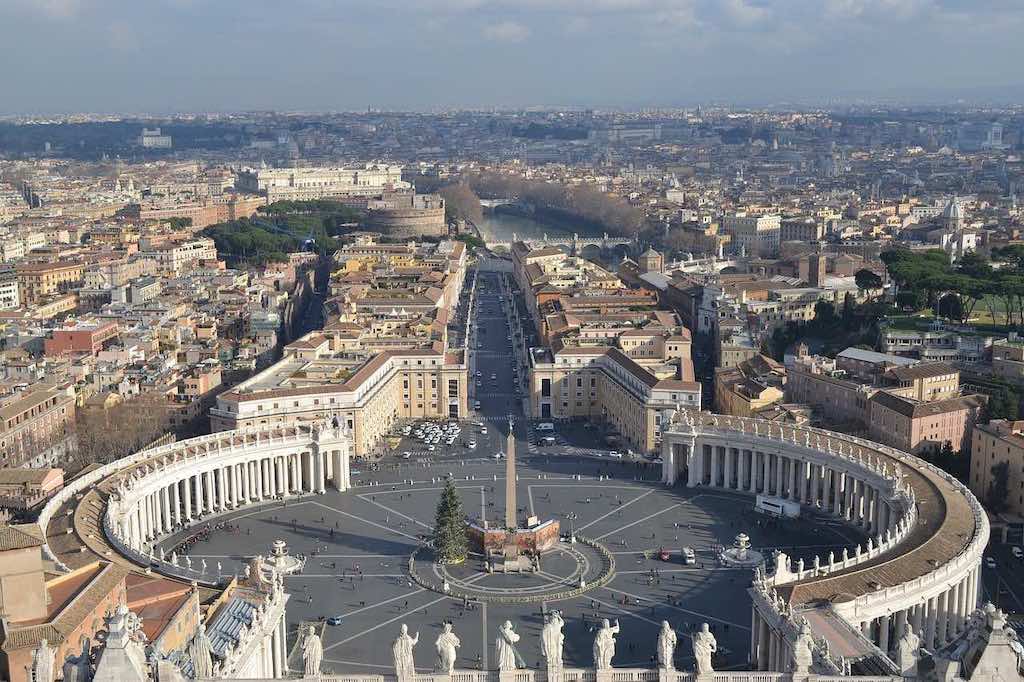
Vatican City
The Vatican is the smallest independent state in the world, with an area of less than half a square kilometer, most of it enclosed by the Vatican walls. Inside are the Vatican palace and gardens, St. Peter’s Basilica, and St. Peter’s Square, an area ruled by the Pope, supreme head of the Roman Catholic Church. This compact space offers a lot of things to see, between its museums and the great basilica itself.
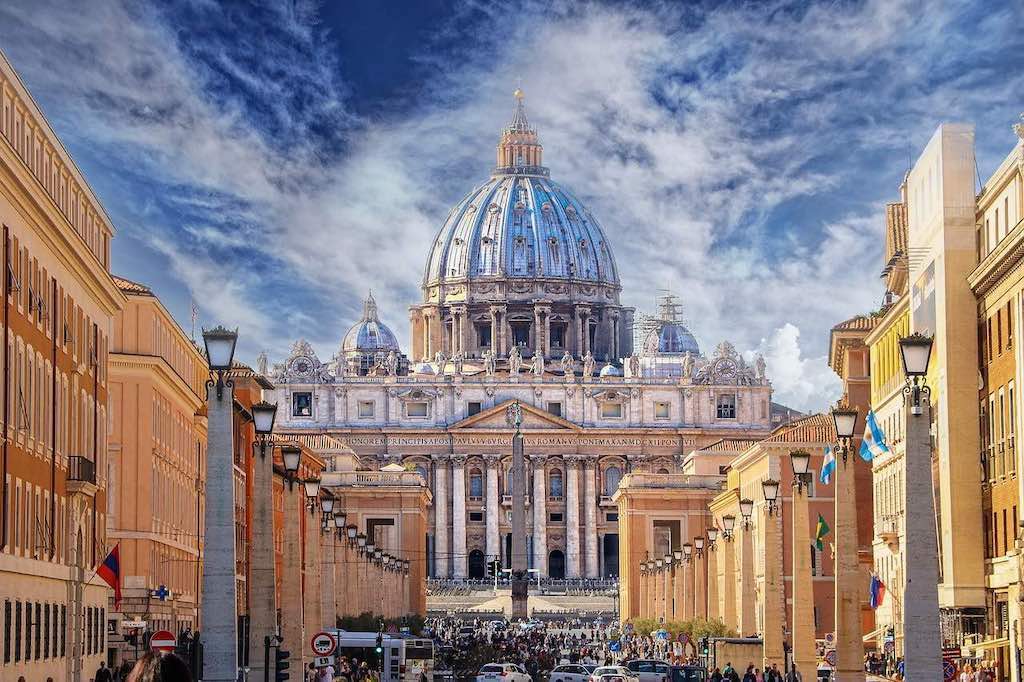
St. Peter’s Basilica
In the city of outstanding churches, none can hold a candle to St Peter’s, Italy’s largest, richest and most spectacular basilica. Built atop a 4th-century church, it was consecrated in Rome in 1626 after 120 years of construction. Its lavish interior contains many spectacular works of art, including three of Italy’s most celebrated masterpieces: Michelangelo’s Pietà, his soaring dome, and Bernini’s 95ft-high (29m) baldachin over the papal altar.
The massive 646 ft-long (187m) interior covers more than 3.7 acres (15,000 sq m). Michelangelo’s hauntingly beautiful Pietà was sculpted when he was only 25, and it is the only work the artist ever signed – his signature is etched into the sash across the Madonna’s breast. Nearby, a red floor disc marks the spot where Charlemagne and later Holy Roman Emperors were crowned by the pope.
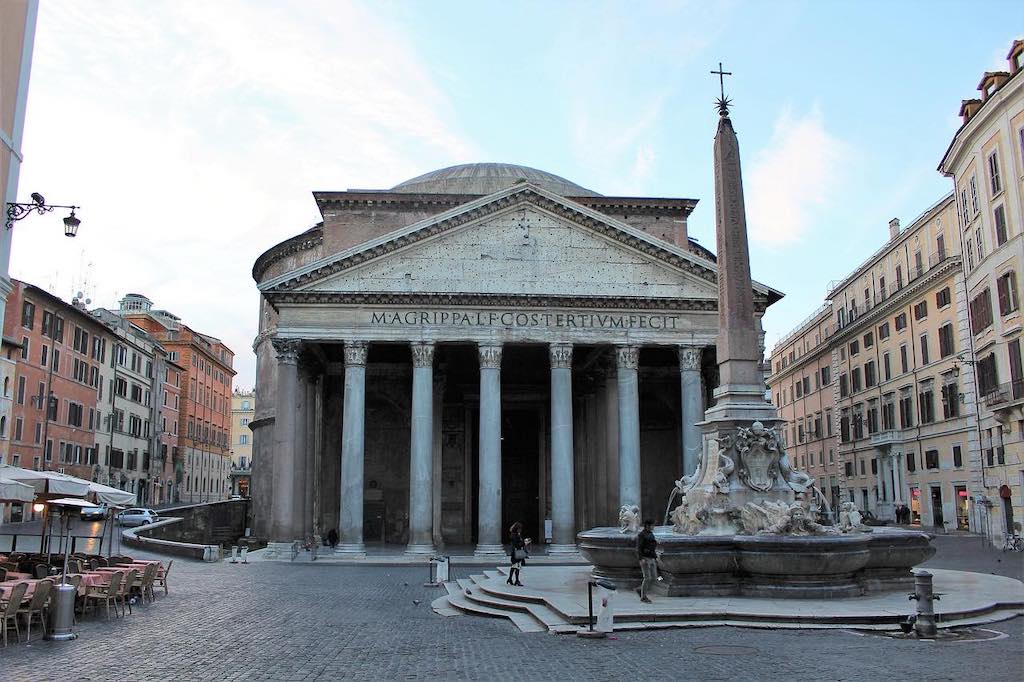
The Pantheon
A striking 2000-year-old temple, now a church, the Pantheon is the best preserved of Rome’s ancient monuments and one of the most influential buildings in the Western world. The Pantheon was rebuilt after damage by fire in AD 80, and the resulting brickwork shows the extraordinarily high technical mastery of Roman builders. Its 43-meter dome, the supreme achievement of Roman interior architecture, hangs suspended without any visible supports – these are well hidden inside the walls – and its nine-meter central opening is the building’s only source of light.
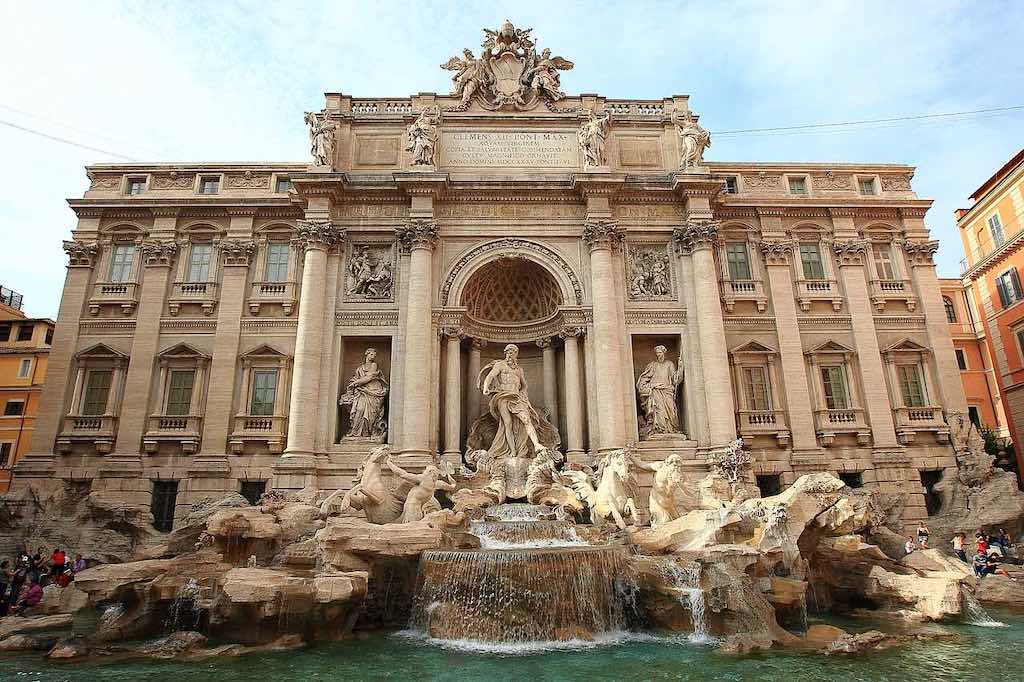
Trevi Fountain
One of the city’s most popular tourist attractions, this 17th-century masterpiece has been immortalized in films until it is almost a required visit. Throwing a coin (not three) into the Trevi Fountain (Fontana di Trevi) is a tradition that is supposed to assure your return to Rome. Rome’s largest fountain, Fontana di Trevi is supplied by an aqueduct originally constructed in the first century BC, to bring water to the baths. The fountain was created for Pope Clement XII between 1732 and 1751 by Nicolò Salvi, and built against the rear wall of the palace of the Dukes of Poli.
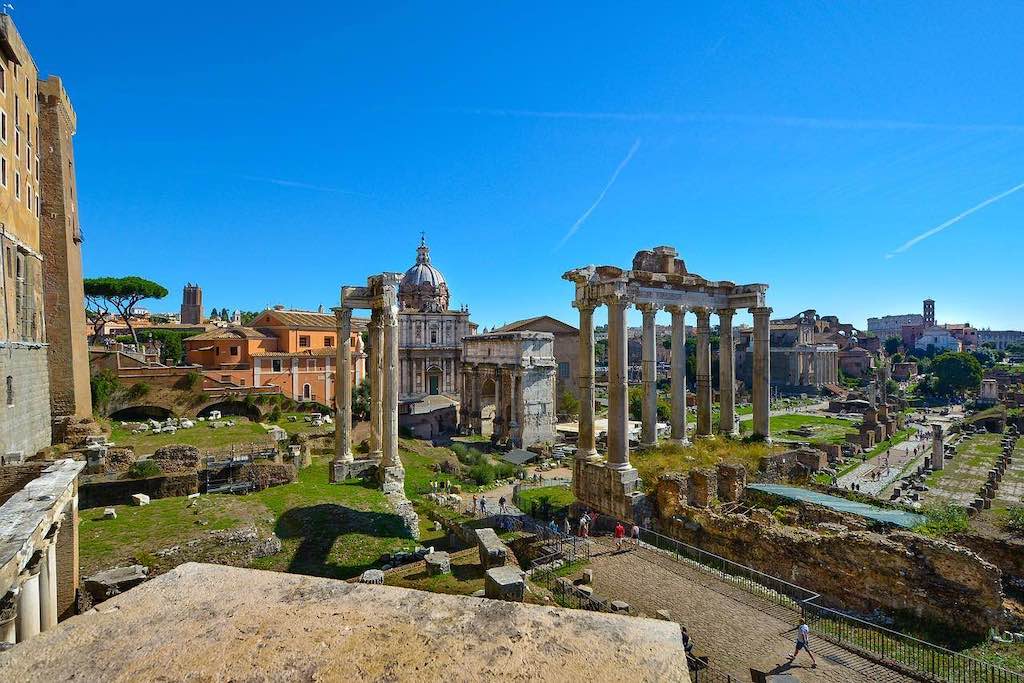
The Roman Forum
An impressive – if rather confusing – sprawl of ruins, the Roman Forum was ancient Rome’s showpiece center, a grandiose district of temples, basilicas and vibrant public spaces. Roman political and religious life was centered here, along with the courts, markets, and meeting places. Highlights are the Temple of Antoninus Pius, the Temple of Castor and Pollux, the Temple of Saturn, the Arch of Septimus Severus, the Curia, the Temple of Vesta, and the Arch of Titus.
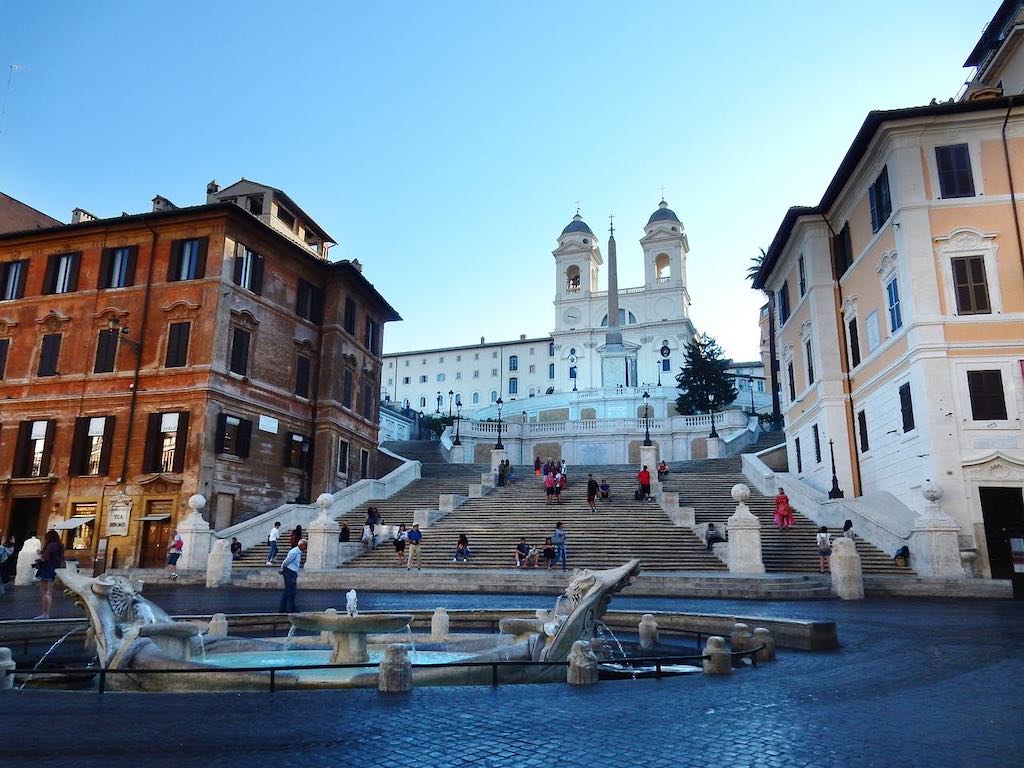
Centro Storico & the Spanish Steps
The Centro Storico, the historic center of Rome, with so many art-filled churches, resplendent palaces, and lively squares that you could spend your whole vacation strolling its ancient streets and lanes. Do spend time at the at the Spanish Steps, the flight of irregular stairs and landings that lead up to the French church of Trinità dei Monti. The stairs take their name from Piazza di Spagna, the plaza at their base and one of Rome’s most typical squares. The stairs have been a favourite haunt of tourists, where they can sit and enjoy a gelato in the summer or warm around cones of hot roasted chestnuts in the winter.
Welcome to Naples
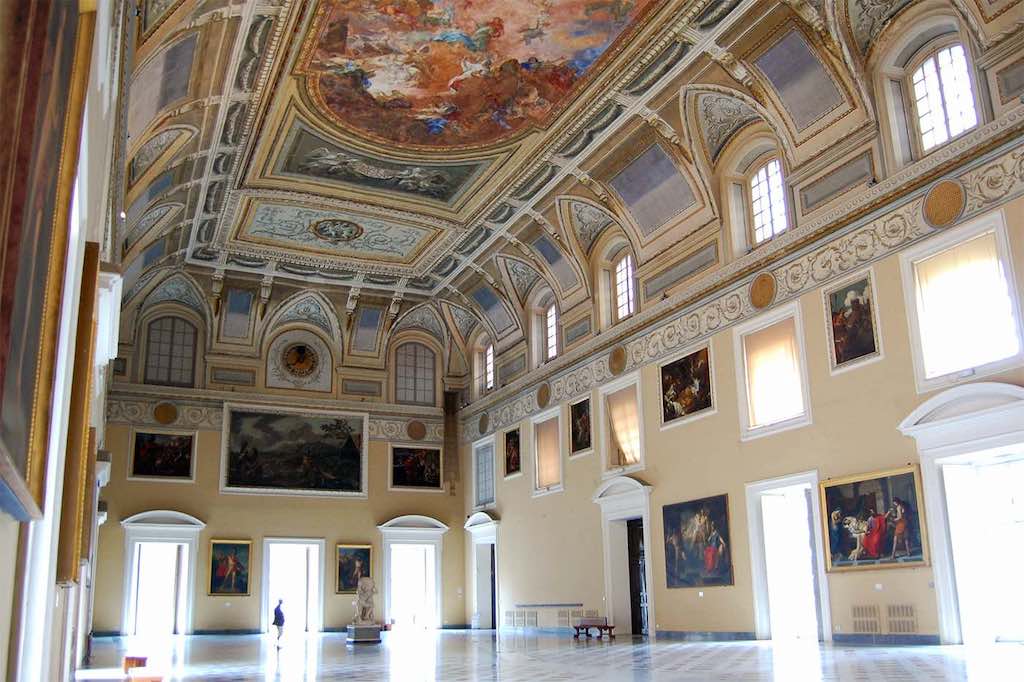
National Archeological Museum
Naples’ National Archaeological Museum serves up one of the world’s finest collections of Graeco-Roman artefacts. It holds one of the world’s finest collections of antiquities, many of which were brought here from early excavations of Pompeii. In fact, more of the city’s artistic highlights are here than at the site itself. In addition, it has the art treasures of the kings of Naples, the Farnese collections from Rome and Parma, the collections from the palaces of Portici and Capodimonte, and material from Herculaneum and Cumae.
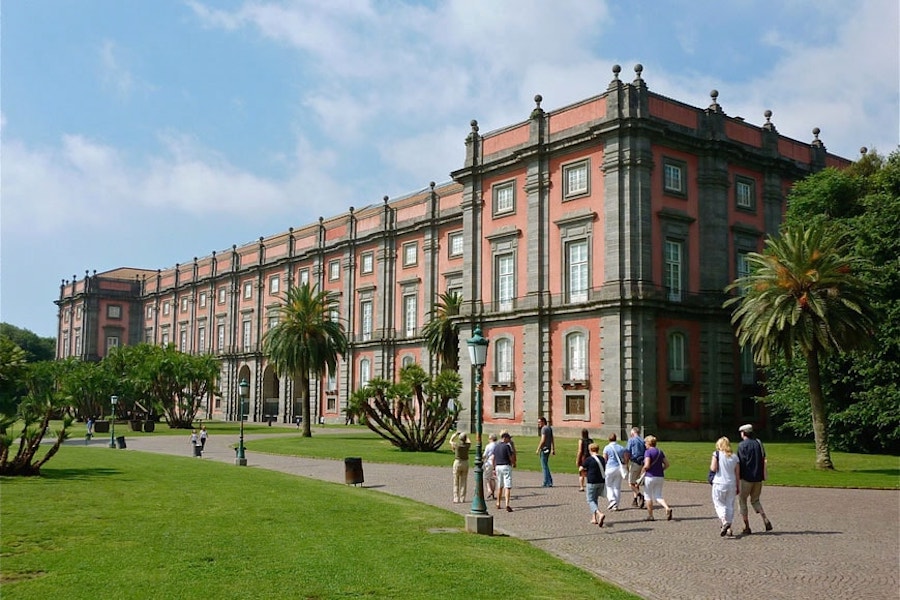
Capodimonte Royal Palace and Museum
Originally designed as a hunting lodge for Charles VII of Bourbon, the monumental Palazzo di Capodimonte was begun in 1738 and took more than a century to complete. It’s now home to the Museo di Capodimonte, southern Italy’s largest and richest art gallery. Its more than 500 pictures include, in addition to the Titians, works by Mantegna, Caravaggio, Raphael, Botticelli, El Greco, Bellini, and Neapolitan artists of the 17th and 18th centuries.
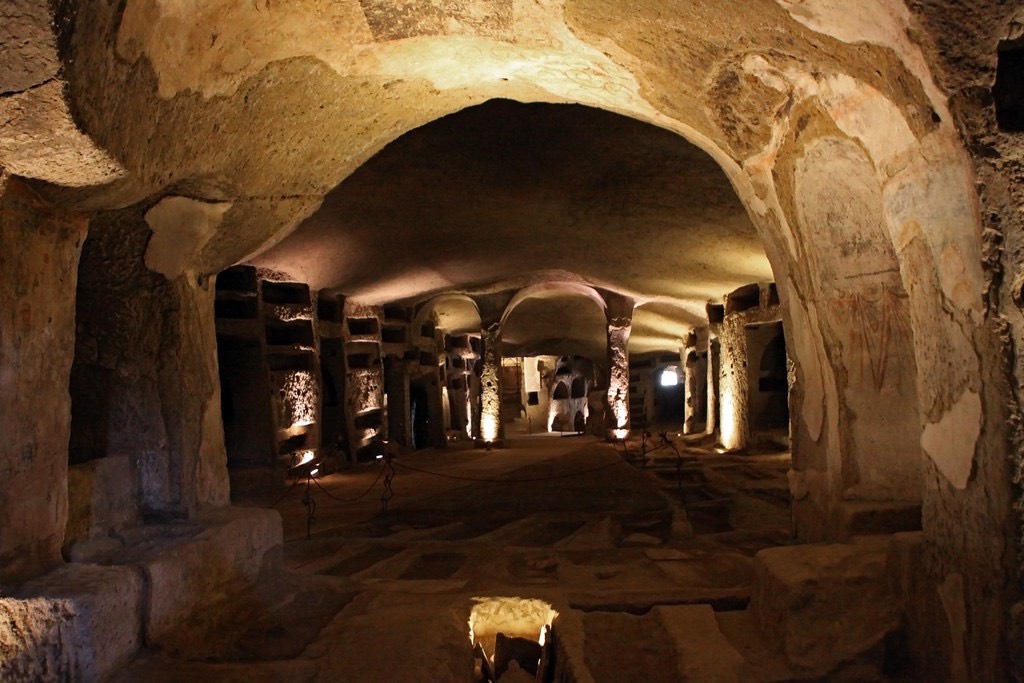
Catacombs of San Gennaro
The second-century Catacombs of San Gennaro, like the Roman catacombs, are a maze of passages and tomb chambers but are more ambitious architecturally and have finer paintings The carefully restored site allows visitors to experience an evocative other world of tombs, corridors and broad vestibules, its treasures including 2nd-century Christian frescoes, 5th-century mosaics and the oldest known portrait of San Gennaro, dating from the second half of the 5th century.
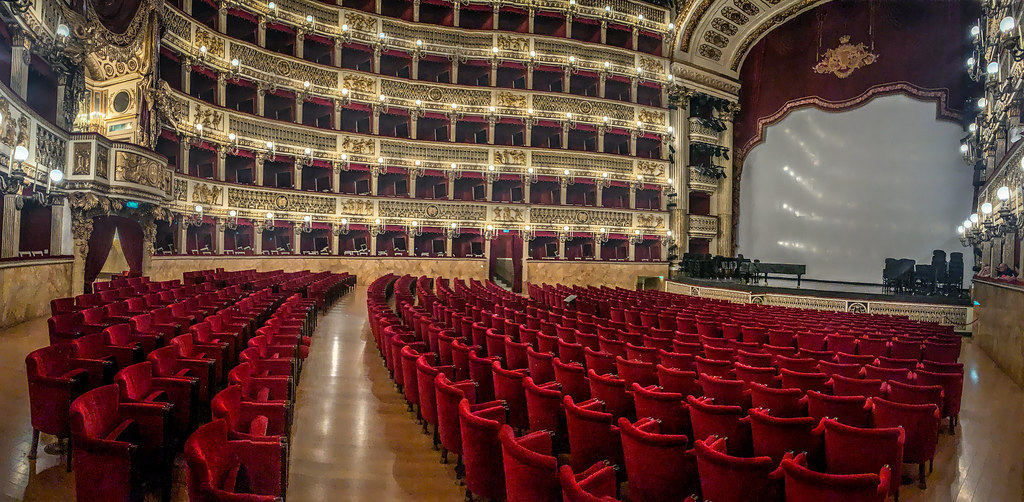
Teatro di San Carlo
One of the largest theatres in Europe and one of Italy’s prominent opera houses, the Real Teatro di San Carlo was built by King Charles of Bourbon, adjoining his Royal Palace. It was completed in 1737, and along with being the oldest continuously active opera house in Europe, it was the model for opera houses everywhere. Six levels of ornately decorated boxes surround the interior, highlighted by the even more lavishly ornate royal box. In addition to operas, performances include concerts and ballet.
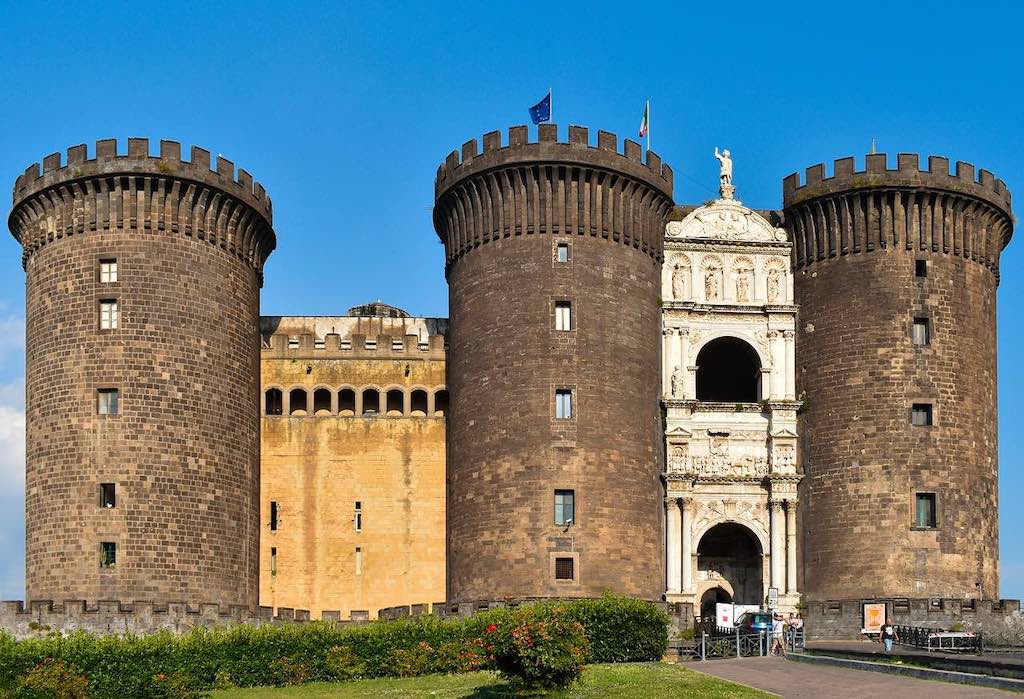
Castel Nuovo
The five-towered Castel Nuovo, also known as the Maschio Angioino, was the residence of kings and viceroys of Naples. It was originally built by Charles I of Anjou in 1279-82, and was enlarged by Alfonso I of Aragon, who had the grand Early Renaissance Triumphal Arch between the towers added between 1453 and 1467 to celebrate his victorious entry into the city. Parts of it are used for events and expositions, but the Armoury Hall, the southern courtyard, the Charles V Hall, and the Sala della Loggia are usually open. In the courtyard is the Gothic church of Santa Barbara (or Cappella Palatina).