Welcome to Florence Few cities are so compact in size or so packed with extraordinary art and architecture masterpieces at every turn. Florence is such a treasure trove that it would take weeks to see everything the city has to […]
Welcome to Florence
Few cities are so compact in size or so packed with extraordinary art and architecture masterpieces at every turn. Florence is such a treasure trove that it would take weeks to see everything the city has to offer. Some of its sights are among Italy’s best-known icons – Ponte Vecchio, Michelangelo’s David, Brunelleschi’s Dome – and the entire city is a showcase of the Italian Renaissance, the humanist artistic movement that broke Europe out of the Dark Ages.
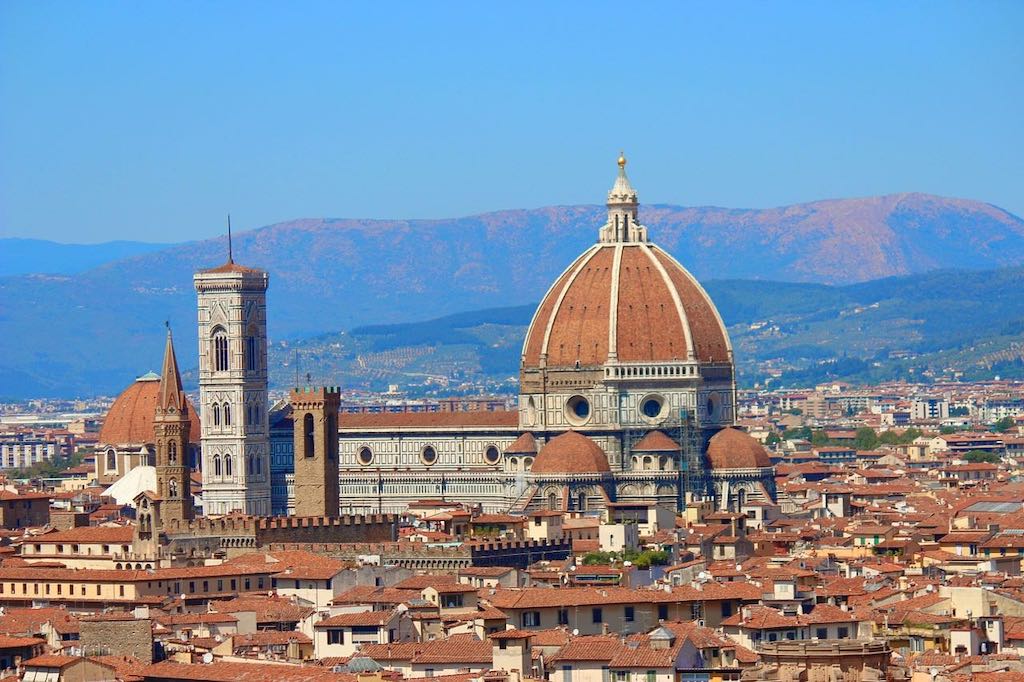
Cathedral of Santa Maria del Fiore and Piazza Duomo
Piazza Duomo and the group of buildings that form its cathedral complex gather some of Italy’s greatest artistic treasures into a relatively small area. As one tours the baptistery, the bell tower, the cathedral, and its museum, they will see some of the best-known masterpieces of art and architecture by the greatest artists of the Italian Renaissance — Ghiberti, Donatello, Brunelleschi, Giotto, and Michelangelo. Sienese architect Arnolfo di Cambio began work on it in 1296, but construction took almost 150 years and it wasn’t consecrated until 1436.
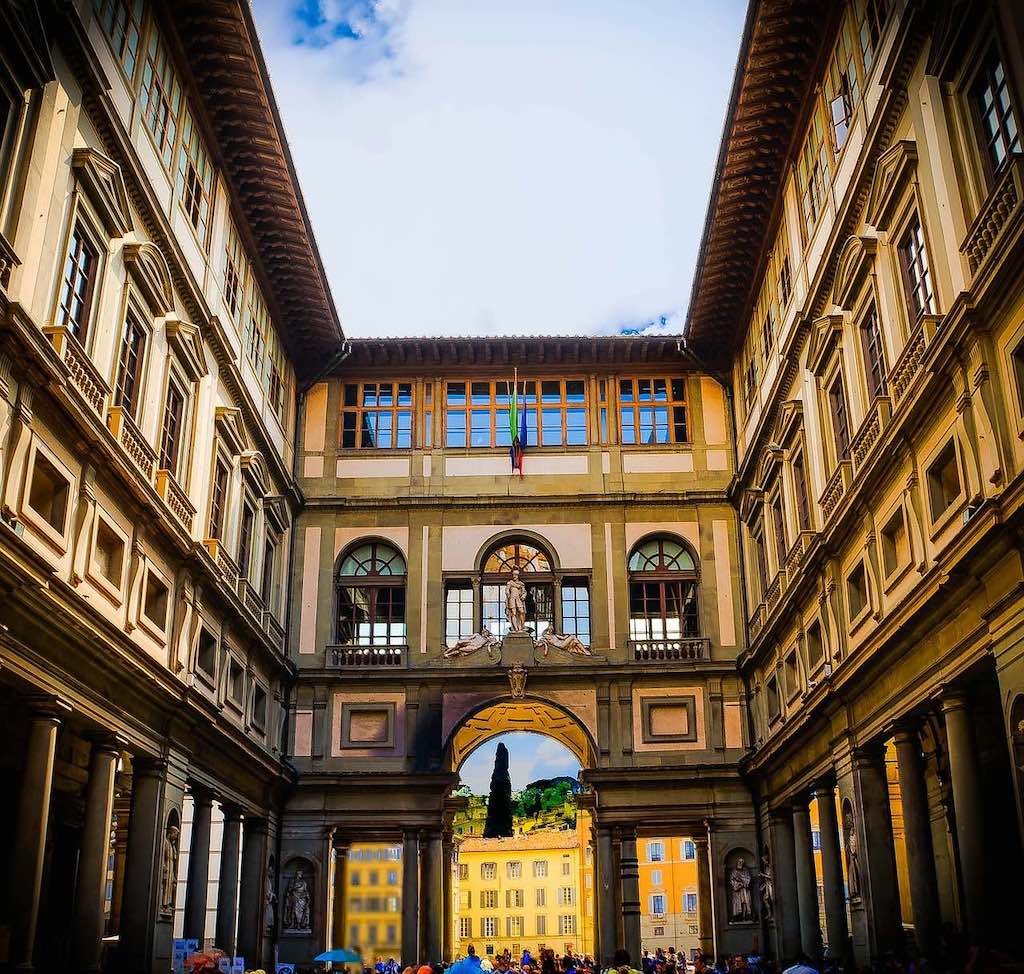
Uffizi Palace and Gallery
Few would argue the Uffizi’s place among the handful of world’s top art museums. Home to the world’s greatest collection of Italian Renaissance art, Florence’s premier gallery occupies the vast U-shaped Palazzo degli Uffizi (1560–80), built as government offices. Its collections are simply staggering in their diversity and quality, and even if art is not your main interest, you should see the highlights of the paintings here.
You’ll come away understanding a lot more of how Florence’s 14th- to 16th-century painters changed the face of western art, as you see the transition from the stilted Byzantine images to the life-like figures and landscapes of the Renaissance artists.
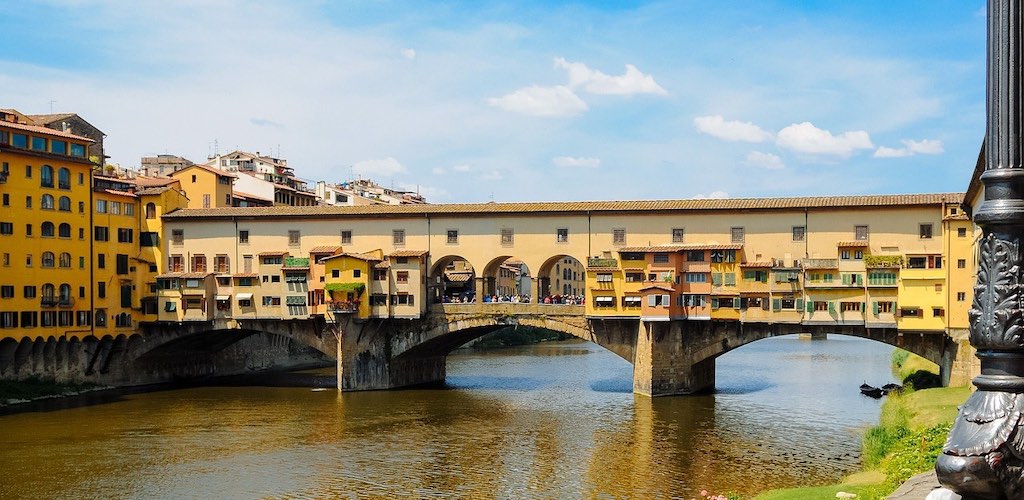
Ponte Vecchio
The Ponte Vecchio may well be the most widely recognized icon of Florence, and its graceful arches topped by a jumble of shops is most certainly one of the city’s most beautiful scenes. The bridge has traditionally been the home for the shops of Florence’s talented goldsmiths, and a stroll across it still shows a dazzling array of fine jewelery.
But most tourists don’t realise that another set of treasures hides above their heads. You can see its line of evenly matched windows above the shops. It’s not just a hallway; lining its walls is a priceless collection of portraits, mostly self-portraits, by artists that include Rembrandt, Leonardo da Vinci, Raphael, Michelangelo, and Velásquez.
Galleria dell’Accademia (Academy Gallery)
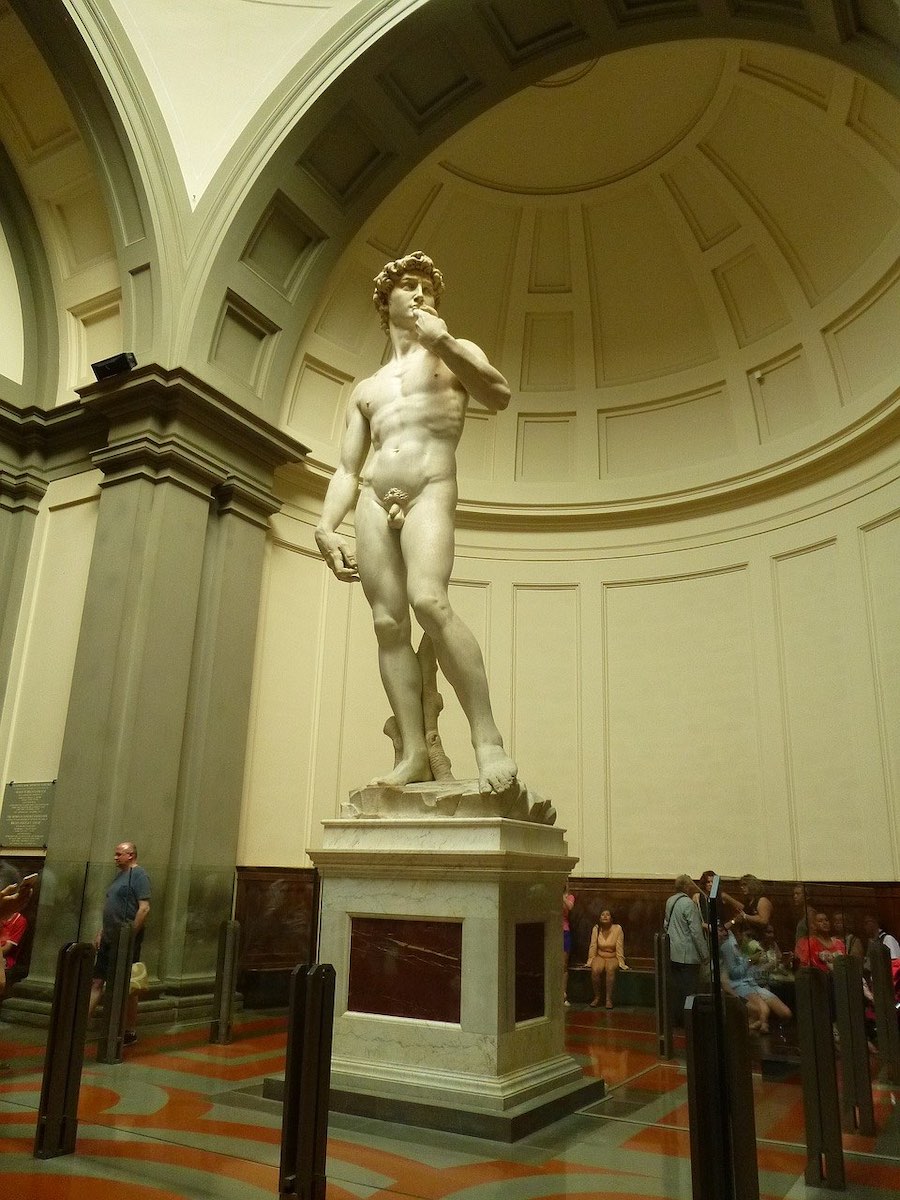
Michelangelo’s best-known work, David, is copied all over Florence, but inside this art museum, you’ll find the original. The David isn’t the only Michelangelo here, nor is it the only important masterpiece. In the sculptures shown in the same gallery, you can almost watch Michelangelo at work as you see the four unfinished slaves, meant for a tomb in Rome, seemingly in the process of being released from the marble.
Piazzale Michelangelo
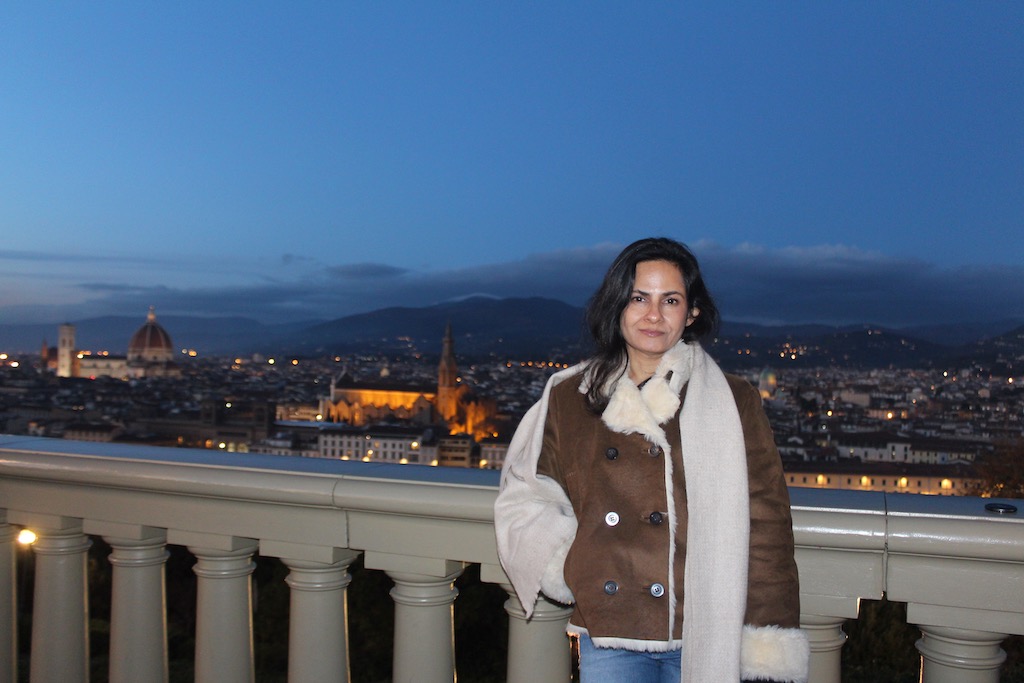
This terrace above the city is an obligatory stop for tour buses, and the spot from which all those postcard shots of the cathedral are taken. During busy tourist seasons, the best time to enjoy it in relative peace is late afternoon or early evening; it’s especially lovely at sunset. Its only from this terrace can you fully appreciate how Brunelleschi’s dome dominates the city centre. Nor can any other height give you this sweeping city view that encompasses the Ponte Vecchio, Palazzo Vecchio, Santa Croce, and other landmarks.
Welcome to Pisa
Pisa is an easy day trip from Florence. The Leaning Tower is just one of many noteworthy sights in this compelling city. The town centre with a vibrant cafe and bar scene, balancing an enviable portfolio of well-maintained Romanesque buildings, Gothic churches and Renaissance piazzas with a lively street life dominated by locals rather than tourists – a charm you will definitely not discover if you restrict your visit to Piazza dei Miracoli.
The Leaning Tower of Pisa
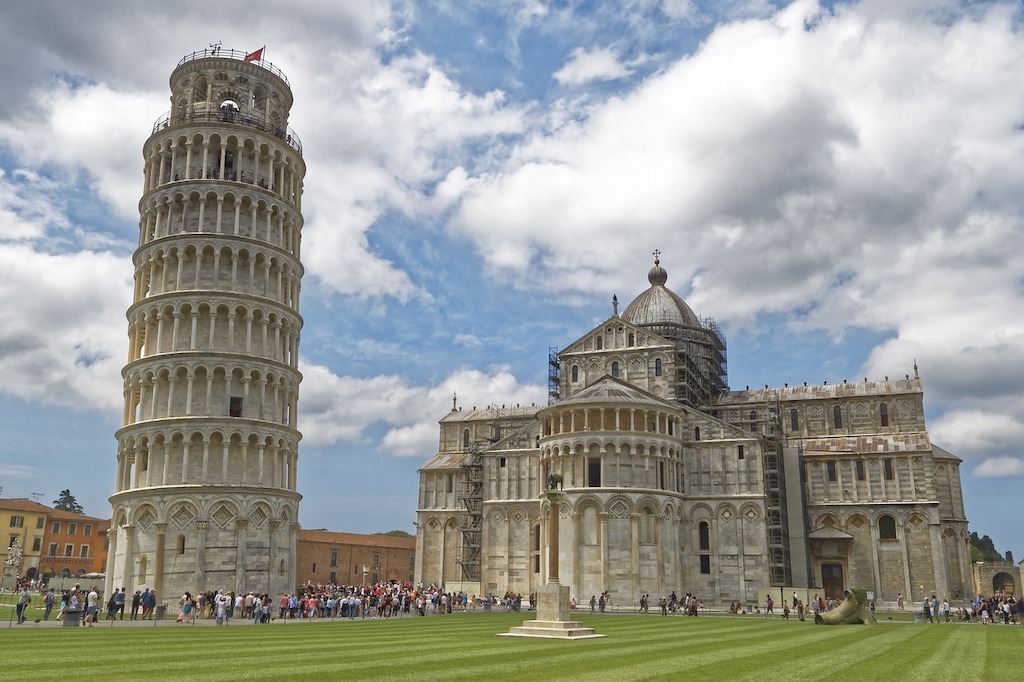
Every child has heard of it, and every visitor to Pisa probably heads first to what is undoubtedly the world’s most famous tower. Until 1990, tourists climbed the spiral staircase of 294 steps to the top platform, but with the angle of tilt increasing by one millimetre a year, it was calculated that the tower would topple by the year 2000. When rotational movement around the axis was also detected, increasing the risk, the tower was closed in 1990 to allow an expensive program of restoration. When the tower re-opened in 2001, the 5.5-degree tilt had been modified to about 3.99 degrees, leaving the top out of line by 3.9 meters.
Cathedral of Santa Maria Assunta
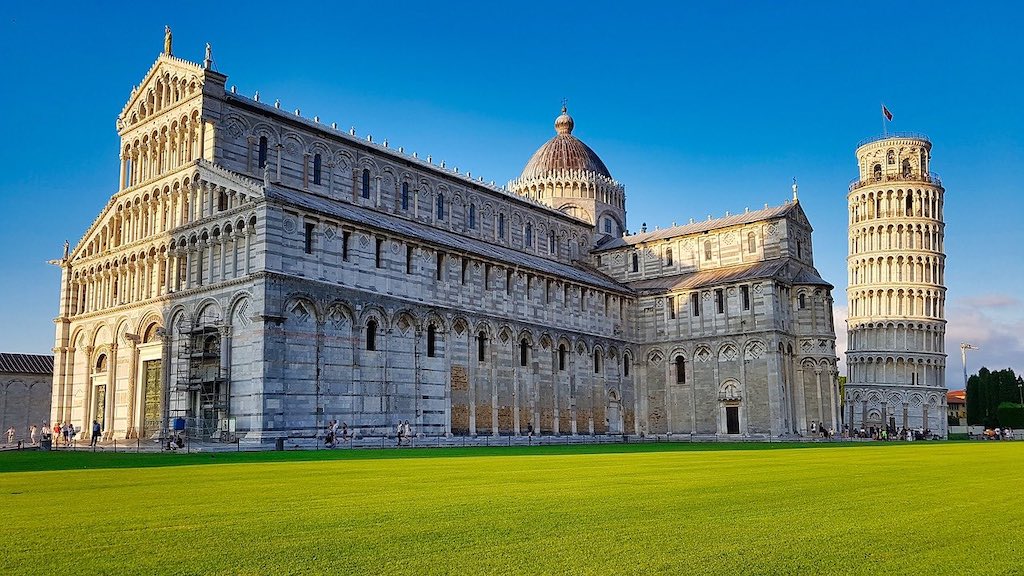
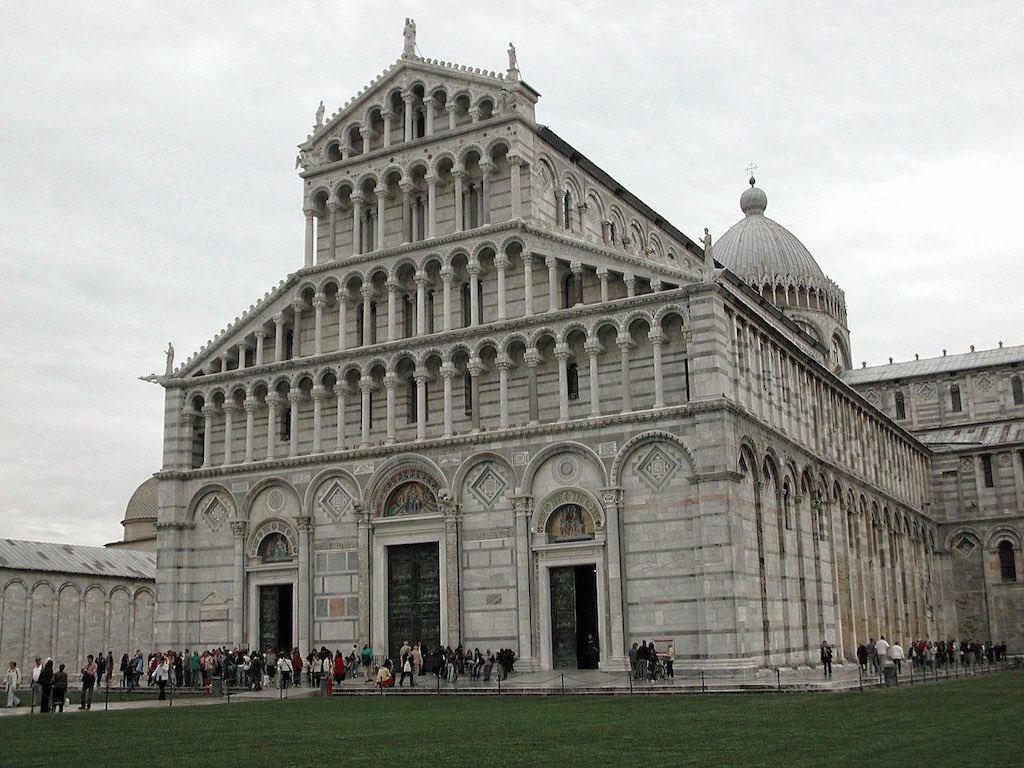
The Cathedral of Santa Maria Assunta is a five-aisled Romanesque basilica of white marble designed by Pisan architect Buscheto. Begun in 1063, after Pisa’s naval victory over the Saracens, it was consecrated in 1118. The artistic highlight in the cathedral is the pulpit by Giovanni Pisano, created between 1302 and 1311. The pulpit is supported on columns (the shorter ones borne on lions) and figures of the Archangel Michael, Hercules, and Christ, with the Four Evangelists around the base.
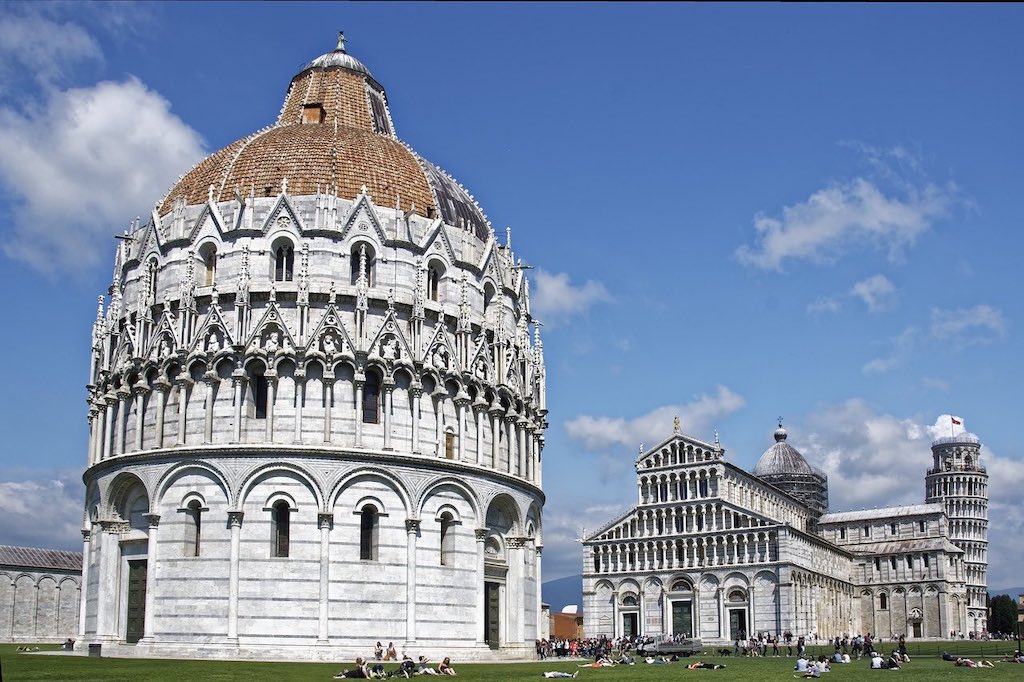
Baptistery
West of the cathedral, the free-standing baptistery was begun in 1153, almost a hundred years after the cathedral but still in the great days of Pisa. The conical dome stands on four pillars and eight columns, creating an effect of light and solemnity. Be sure also to see the font by Guido da Como (1246) and the figures of saints by students of Nicola and Giovanni Pisano. The baptistery is also notable for its superb acoustics, which the guides usually make a point of demonstrating.
Welcome to Lucca
Lucca is a historical city located in Tuscany on the western coast of Italy – this city lies in close proximity to Pisa and is known as the city of a hundred churches due to its large amount of historical religious structures. Lucca is known throughout Italy for its fantastic medieval city walls that still encircle most of the historic old town.
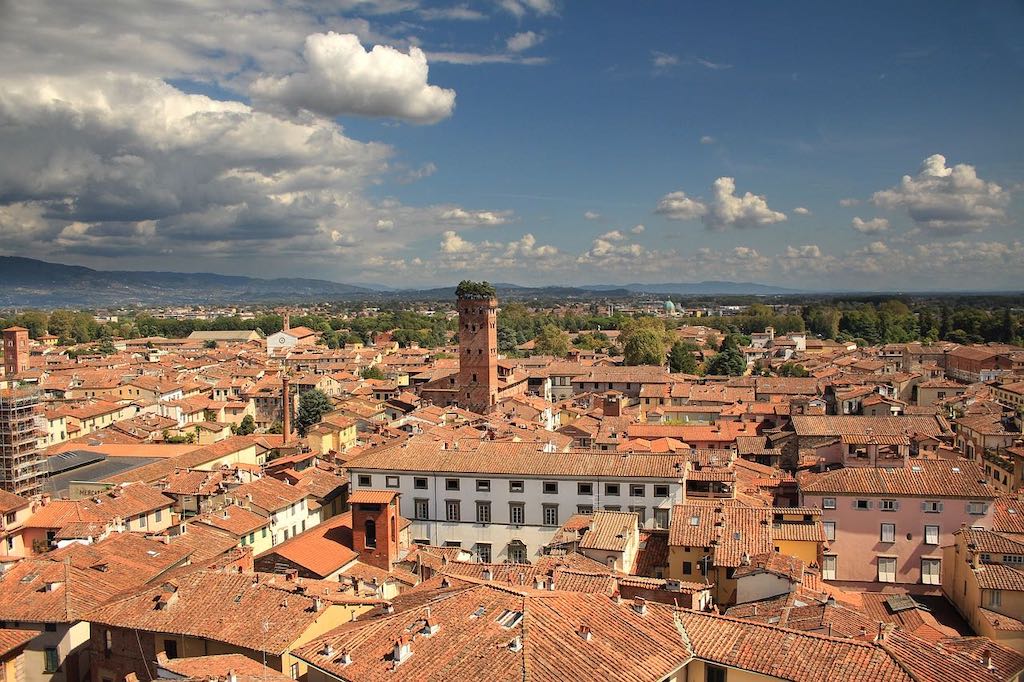
Guinigi Tower
In the centre of the walled old town, one can’t help but notice a massive tower with oaks growing on the top. It belongs to the Case dei Guinigi, a complex of two mansions belonging to the noble family that brought Lucca a period of peace and prosperity at the beginning of the 15th century. The two palaces, standing opposite one another, were built in the 14th to 15th centuries; one now houses the National Museum. One can climb the tower and view the city from beneath the trees at a height of 44.25 meters.
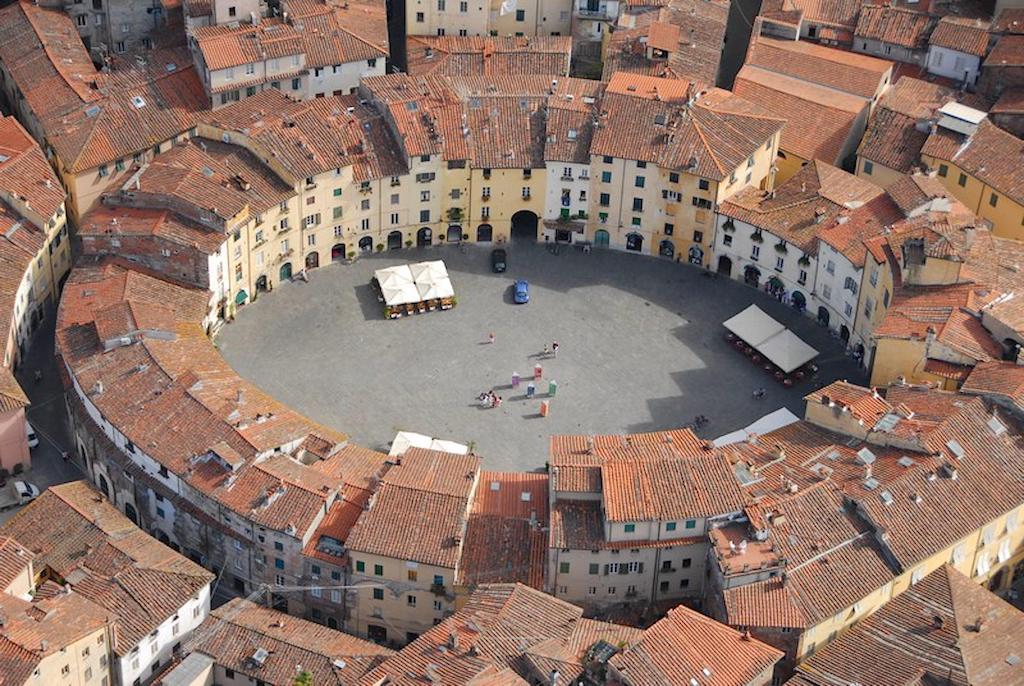
Anfiteatro Romano (Roman Amphitheater)
Strolling Lucca’s historic center, you can’t help noticing the peculiar curve of some streets. If you look closely, you’ll see some unusual filled-in arches in the stonework of the buildings, and will eventually come to a passageway leading into Piazza del Mercato. This odd oval space surrounded by multi-storied buildings was once the interior of Lucca’s Roman arena, and the buildings follow the footprint of its massive stone walls, having been built into its remains.
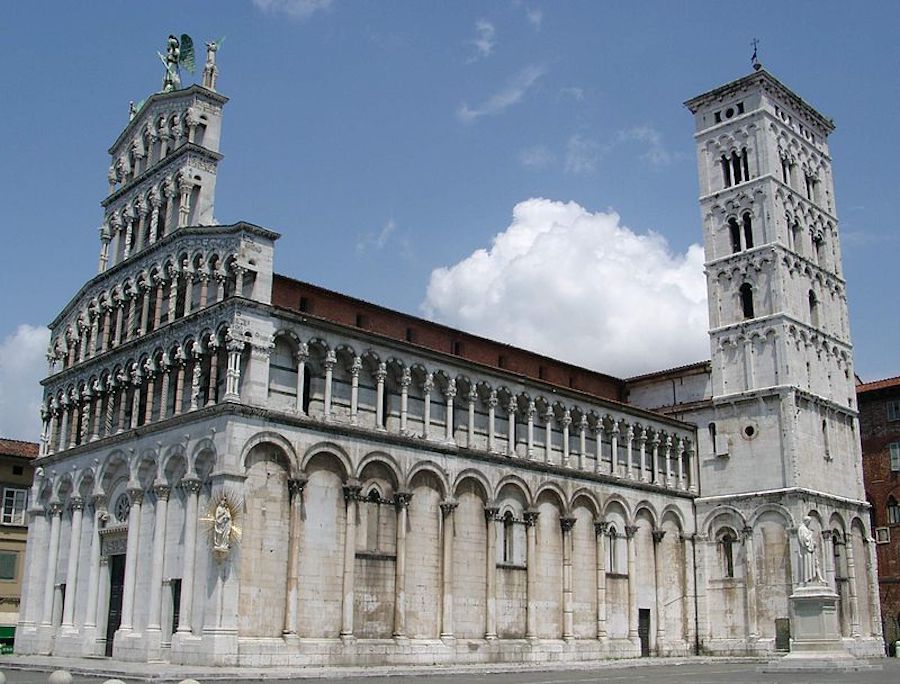
San Michele in Foro
With its stunning façade rising in tiers like a decorated wedding cake and its placement in a broad piazza in the historic center of the city, the church of San Michele was built from the 12th to the 14th centuries, and its façade of carved and inlaid marble is breathtaking, seldom repeating a design on its four layers of intricately worked pillars.
Cathedral
The marvellous Romanesque facade with arches and delicately carved columns provides clues to the treasures inside Lucca’s cathedral, which was rebuilt in the 13th century from an earlier church. The portico was decorated in the mid-13th century with fine sculptures by Lombard artisans. In the main doorway are four beautifully carved 13th-century scenes from the life of St. Martin. Attached to the right side is a massive campanile, 69 meters high, of light-colored travertine and brick. Carved into the right pier of the portico is a labyrinth, especially interesting because it may predate the famous Chartres maze of the same pattern. Just inside on the right is the famous early 13th-century stone carving of St. Martin and the beggar, one of Lucca’s finest examples of Romanesque sculpture.