
The lost City of Pompeii Nearly 2,000 years ago, Pompeii was a bustling city located in what is now southern Italy. But in the summer of A.D. 79, the nearby Mount Vesuvius volcano erupted. It spewed smoke and toxic gas 20 […]
The lost City of Pompeii
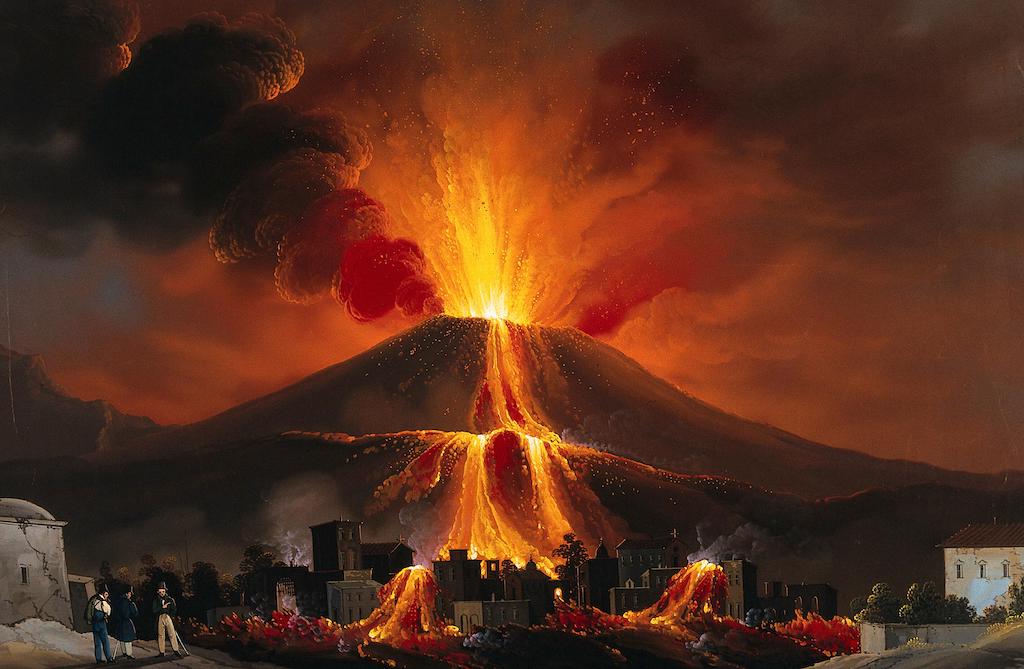
Nearly 2,000 years ago, Pompeii was a bustling city located in what is now southern Italy. But in the summer of A.D. 79, the nearby Mount Vesuvius volcano erupted. It spewed smoke and toxic gas 20 miles into the air, which soon spread to the town. Almost overnight, Pompeii—and many of its 10,000 residents—vanished under a blanket of ash.
The work of recovering ancient Pompeii still continues, with each new find adding to our understanding of life in 79 BC. Expect to be surprised at how vivid an impression of ancient life you get in its homes, shops, and public places. The feeling is inescapable that when the eruption came, everyone had been in the middle of going about their normal daily business, never dreaming that their last acts would become a window into history.
Antiquarium
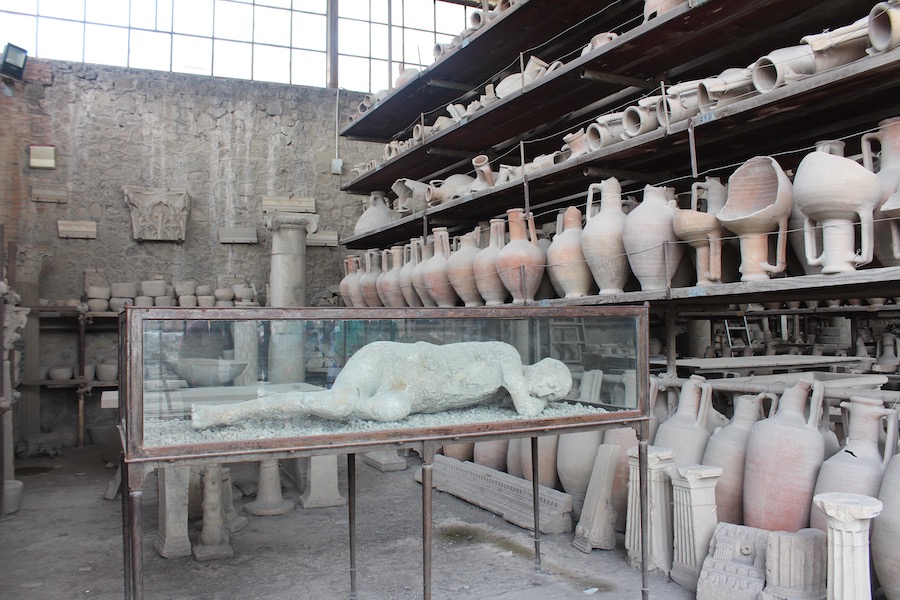
When visiting Pompeii, it really is worthwhile to stop in this museum first. You’ll not only find helpful interpretive displays, but you’ll see many of the artifacts found during the excavations that were either too fragile or too prone to weathering to be left in place. Here, you’ll see the implements of everyday life – rows of amphora and other vessels, furnishings, and small household and commercial items.
Along with these are the plaster casts made from almost perfect molds left in the solidified ash by the bodies of those caught in the sudden destruction. As these spaces were found by excavators, they were carefully filled with plaster, forming images of the victims as they tried to escape. They bring those final moments into grisly reality and make Pompeii more than just a historic site.
Temple of Isis
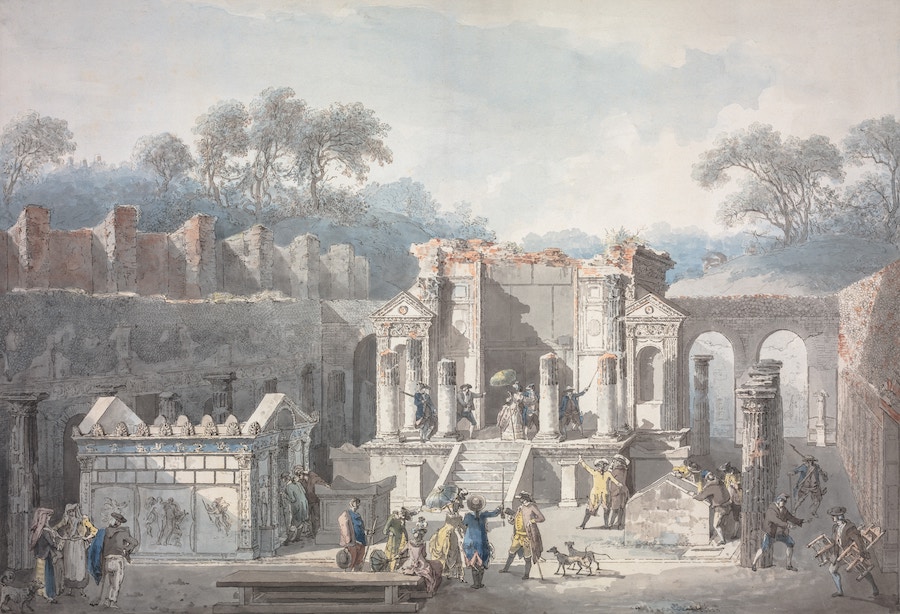
Temple of Isis, dedicated to the Egyptian goddess whose cult was very popular in the Roman Empire. Although the temple was constructed in the second century BCE, it was destroyed in the earthquake of AD 62 and completely rebuilt. The temple stands on a raised base at the center of a courtyard surrounded by porticoes.
Terme Stabiane (Stabian Baths)
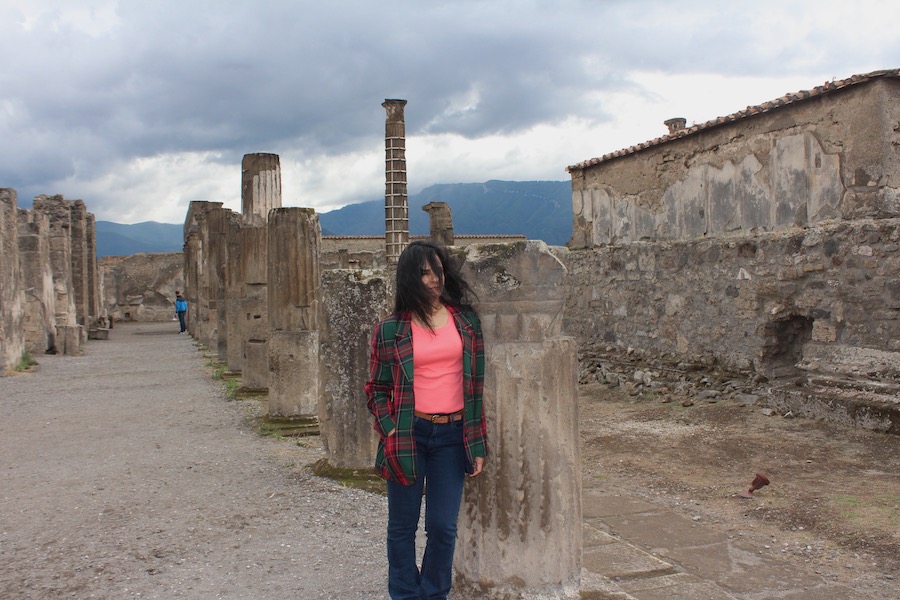
At the corner of Via dell’Abbondanza and Via Stabiana are the largest and best-preserved baths in Pompeii. The entrance leads into the colonnaded palaestra, with a swimming pool on the left; on the right are the male and female baths with stoves for heating the water in between.
Each facility has a circular cold bath (frigidarium), a changing room (apodyterium) with racks for clothing, a warm bath (tepidarium), and a hot bath (caldarium) heated by air-ducts in the floor and walls. Gladiators trained in the gymnasium, which was also part of the Stabian complex.
House of Menander
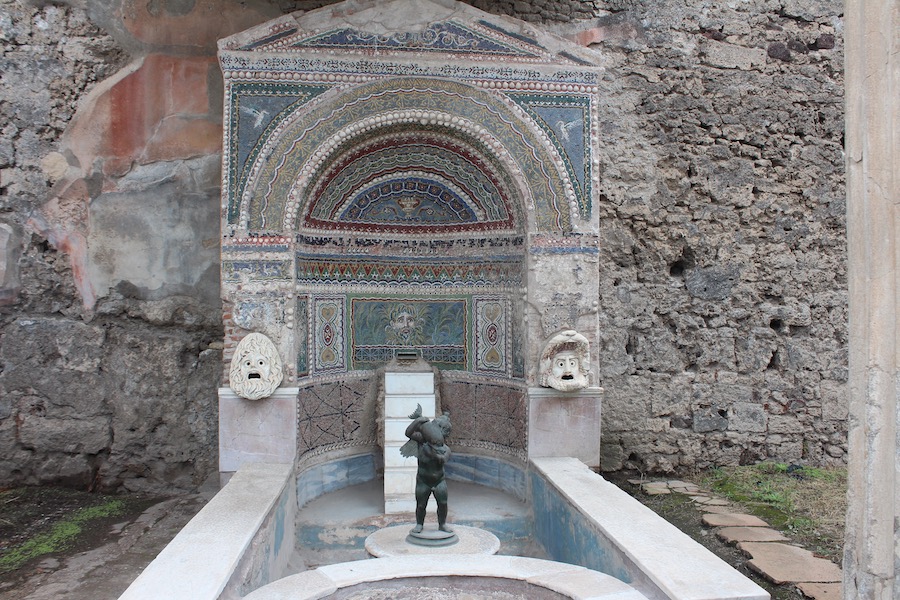
The large, well-preserved House of Menander belonged to a wealthy merchant who gave notice of his status right at the entrance, which is flanked by pillars with Corinthian capitals. The well-preserved atrium has a little temple in one corner and an intact wooden roof that extends out to the center opening, where water drained to collect in the pool below.
The inside rooms are decorated with scenes from Homer’s Iliad, and the peristyle is surrounded by a beautiful painted colonnade. Adjoining this is the charming little House of the Lovers, named for an inscription that translates “lovers, like bees, wish life to be as sweet as honey.” Further down, Via dell’Abbondanza, on the left, is the Thermopolium, a tavern fully equipped with drinking vessels, a kettle, a stove, and a lamp; the last customer’s money is still on the counter.
Herculaneum
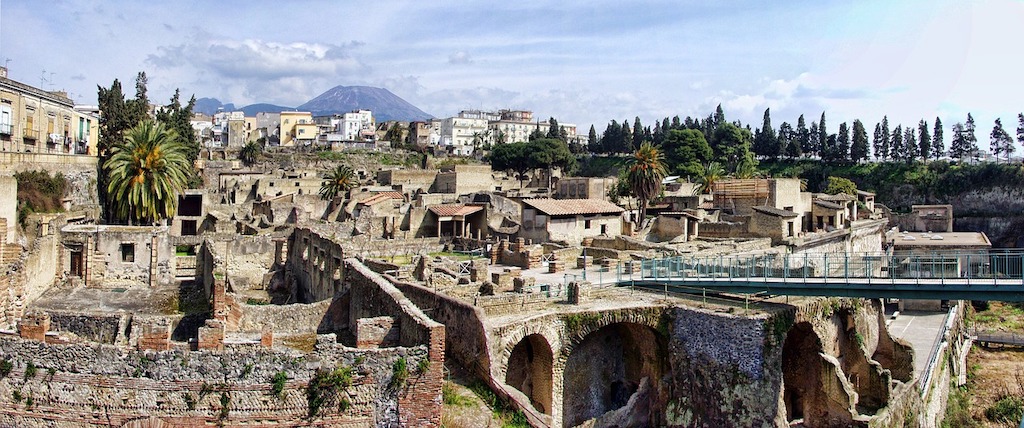
Destroyed in AD 79 by the same eruption of Mt. Vesuvius that engulfed Pompeii, Herculaneum was buried in molten lava, instead of the ash that covered Pompeii. The town of about 6,000 people lay for centuries encased in a solid mass of pumice and ash. This hard, deep covering formed an airtight seal that protected it from plunderers and even from early excavation methods, saving artifacts and priceless details that have been lost at Pompeii.
House of the Neptune Mosaic
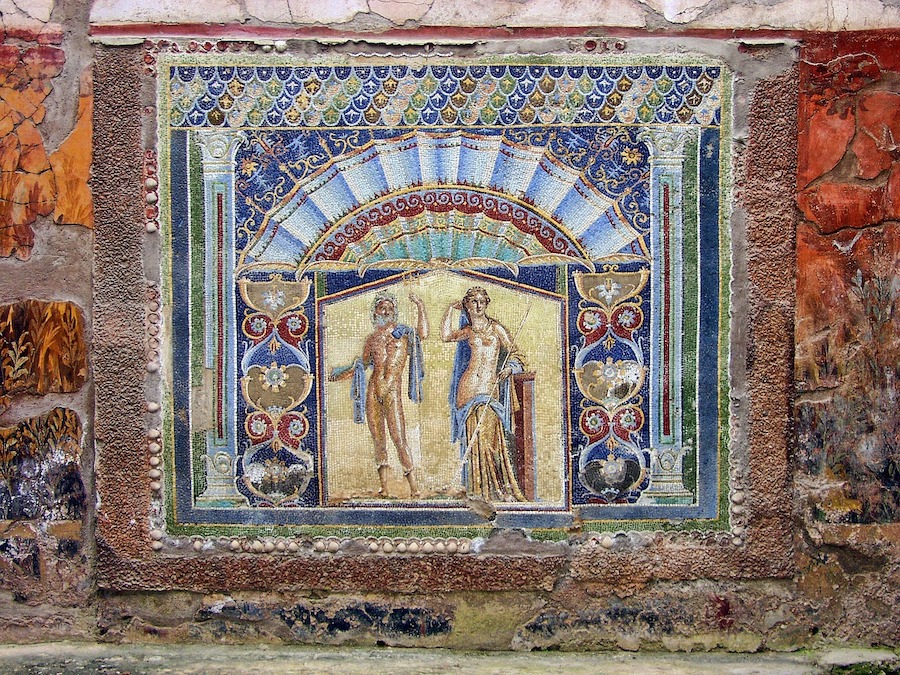
House of the Neptune Mosaic is named for the well-preserved glass wall mosaic of Neptune and Amphitrite, one of a number of beautiful mosaics in this house, which evidently belonged to a wealthy family. At the rear of the house is a courtyard with a nymphaeum, a grotto-like alcove with a fountain. On the wall beside the nymphaeum is the well-preserved mosaic of Neptune and Amphitrite, in vivid colors.